This page provides an essential overview of childhood cancer. It offers clear, accessible information about leukemia, the most common type of childhood cancer, as well as current treatments, the reality of treatment side effects, and the complex journey of a bone marrow transplant.
Understanding pediatric cancer
What is cancer?
The human body is made up of billions of cells. When healthy, these cells respond to specific chemical signals that help ensure the proper function of the organism and its various systems (blood, respiratory, nervous, digestive, etc.). Each type of cell has its own lifespan, with red blood cells living for about 120 days, for example, while blood platelets reproduce every five to 10 days.
Cancer occurs when a dysfunctional cell or group of cells begins to multiply in a rapid and uncontrolled manner. As they propagate, these abnormal cells — deemed malignant or cancerous — spread to healthy surrounding tissue and eventually form a mass called a tumour.
These malfunctioning cells no longer respond to the body’s regulation mechanisms. In certain cases, they detach from the initial tumour and travel through the blood or lymphatic system to other organs or systems, where new tumours develop. These new focal areas of the disease are referred to as metastases.
Good to know: Unlike adult cancers, which are often linked to environmental factors or lifestyle habits such as smoking or diet, childhood cancers generally result from random genetic mutations that occur during a child’s rapid growth and development.
Types of cancer among children
Cancer can affect all parts of the body, unfortunately. Among children, the types of the disease often differ from those observed in adults.
The most common types of paediatric cancer are:
- Leukemia (blood and bone marrow cancer)
- Brain tumours (brain cancer)
- Lymphoma (lymph node cancer, such as Hodgkin lymphoma)
- Neuroblastoma (cancer in immature nerve cells)
- Nephroblastoma or Wilms tumour (kidney cancer)
- Rhabdomyosarcoma (cancer of the muscle tissues)
- Osteosarcoma and Ewing sarcoma (bone cancer)
- Retinoblastoma (eye cancer)
Focus on leukemia
To gain a proper understanding of leukemia, it is necessary to know about the three main components of blood, all of which are produced in the marrow at the center of the bones:
- White blood cells: They act to defend the organism against infection.
- Red blood cells: They transport oxygen to nourish bodily tissues.
- Platelets: They permit coagulation to stop bleeding in the event of injury.
Leukemia is a cancer that develops in the bone marrow, where blood cells are still young and immature. The disease disrupts the normal production of cells, leading to a proliferation of abnormal white blood cells that eventually enter the bloodstream and prevent healthy cells from doing their work.
Common symptoms of leukemia
The proliferation of leukemia cells to the detriment of healthy cells leads to the presentation of various clinical symptoms:
Caused by the lack of red blood cells, manifest in considerable fatigue, paleness and a general decline in the child’s condition.
Caused by the lack of functional white blood cells, expressed in unexplained and sometimes intense fever spikes.
Caused by a decrease in platelets, making the person susceptible to bruising easily or resulting in the appearance of small red spots on the skin (purpura), particularly on the legs.
Specifically bone pain due to the propagation of leukemia cells inside the bones.
Treatments for paediatric cancer
As soon as the diagnosis is made, the medical team works quickly to establish an adapted treatment protocol. The ultimate objective is to achieve a complete recovery, with the care trajectory divided into two main stages:
Remission
The first victory. Remission is referred to when medical examinations no longer detect visible cancerous cells within the organism.
Complete recovery
Confirmed after five years of continuous remission without a recurrence of the disease.
The 4 pillars of treatment
To destroy cancer cells, three main forms of treatment are used in medicine, often in combination.
Chemotherapy involves the use of anticancer medications that circulate through the bloodstream to the entire organism with the aim of destroying rapidly dividing cells. These treatments may be administered in various ways:
- Orally: in tablet or liquid form.
- By intravenous injection: directly through a vein (often via a central venous catheter).
- By intramuscular injection: into a muscle.
- Via lumbar puncture (intrathecal chemotherapy): injected directly into the cerebrospinal fluid surrounding the bone marrow and the brain to circumvent the nervous system’s natural protective barrier.
Potential side-effects
These powerful medications also have a temporary effect on rapidly regenerating healthy cells. The most common effects include:
- Fatigue
- Nausea and vomiting
- Hair loss
- Sores inside the mouth or intestine (mucositis)
- Changes in appetite and taste
- A reduction in blood cells (temporarily increasing the risk of infection and bleeding)
Unlike traditional chemotherapy, these innovative treatments work in more precise ways. Targeted therapies are designed to attack specific genetic abnormalities found in cancer cells, while immunotherapy helps stimulate the child’s own immune system to recognize and destroy cancer cells. One example of immunotherapy is CAR-T cell therapy.
Potential side-effects
Because these treatments generally spare more healthy cells than chemotherapy, their side effects are often different. The most common include:
- Flu-like symptoms (fever, chills, and muscle aches)
- Fatigue
- Skin reactions (redness, itching or dry skin)
- Temporary inflammatory reactions, depending on the area being treated
Radiotherapy uses high-energy radiation beams to destroy the DNA of cancer cells in a specific area of the body or treat specific regions such as the brain.
Potential side-effects
Side-effects vary depending on the area treated, but frequently include:
- Extreme fatigue
- Skin reaction (akin to a sunburn) in the area targeted
- Localized hair loss (only in the area treated)
- Headaches, nausea or diarrhea
- Loss of appetite
For solid tumours, the surgical procedure consists of removing the cancerous mass. Quite often, it is preceded by chemotherapy or radiotherapy rounds aimed at reducing the size of the tumour beforehand to make the operation easier and safer for the child.
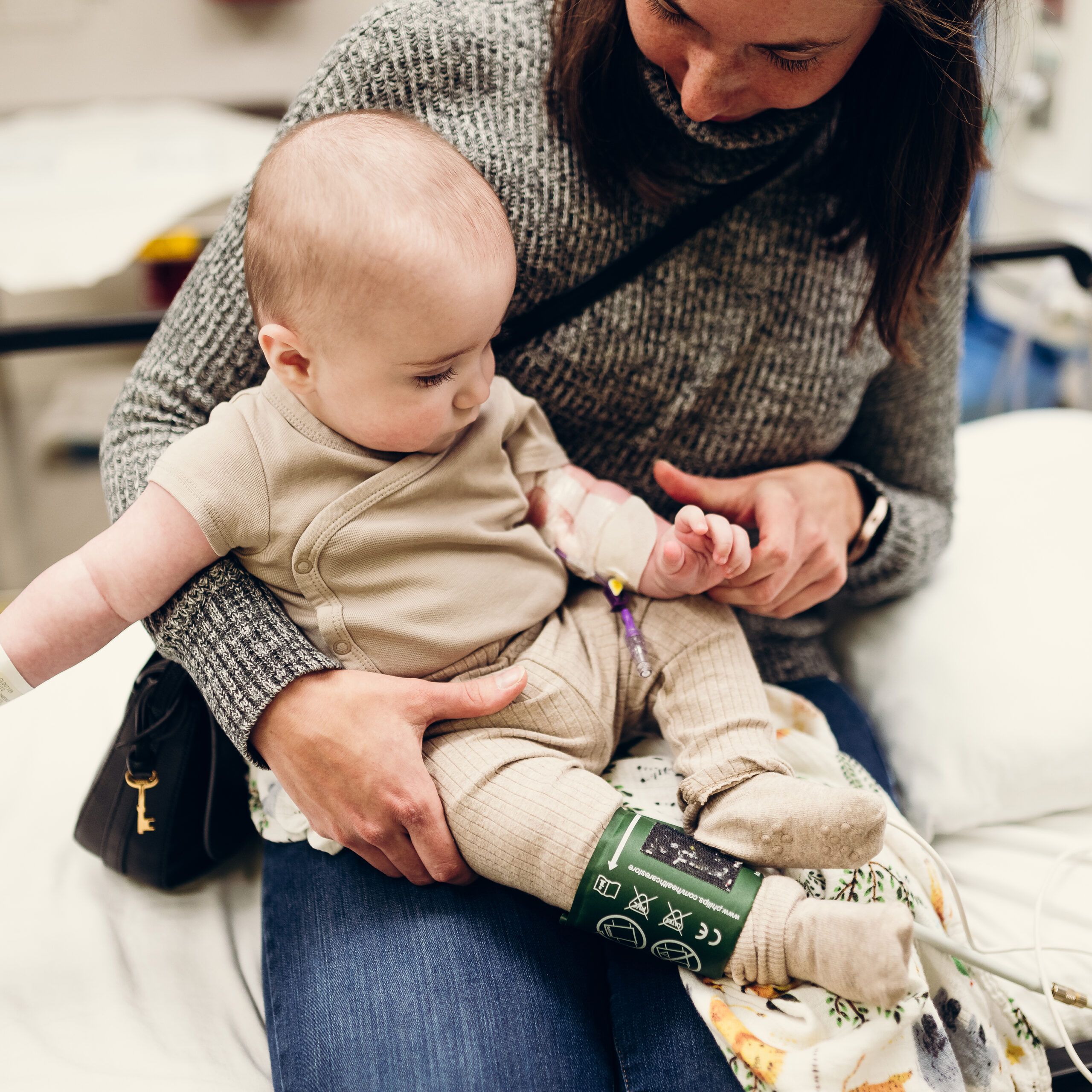
A critical step in treatment
Bone marrow transplant
A bone marrow transplant (or stem cell transplant) is a leading-edge procedure generally considered in the event of a recurrence, when first-line treatment fails to achieve or maintain remission.
The procedure
The treatment consists of replacing the child’s diseased bone marrow with healthy stem cells from a compatible donor (a brother, sister, parent or unrelated donor).
Prior to receiving the new cells intravenously, the child undergoes intensive treatment aimed at destroying their own marrow and their defective white blood cells.
This essential stage temporarily renders the child hyper-vulnerable, as they no longer have an immune system with which the defend themselves or reject the new marrow. Consequently, the child must be placed in strict protective isolation at the hospital for about three weeks.
If the transplant is successful, the donor’s young cells nest inside the child’s bone cavities and begin to produce a healthy new blood count.